Notes · 27 September 2025
Hard light and after the rain
Photographing in tropical sun, the short golden hours at each end of the day, and why a storm is good news.
Photographing Singapore is mostly a matter of dealing with the light. In the middle of the day it is hard and white, straight down from above. Faces disappear under the shadows of their own brows, the tops of things burn out, and everything under a roof turns black. The camera can't hold both ends at once, and the pictures come out flat and harsh.
Go early, go late
Because the island is so close to the equator, sunrise is close to seven in the morning and sunset close to seven in the evening all year round, and the soft light either side lasts well under an hour. The low sun gives shape to plaster fronts, warms the colours and throws long shadows down the streets. On the Old Streets walk, the painted houses of Koon Seng Road are at their best in the first hours of the morning; by ten the magic is gone.
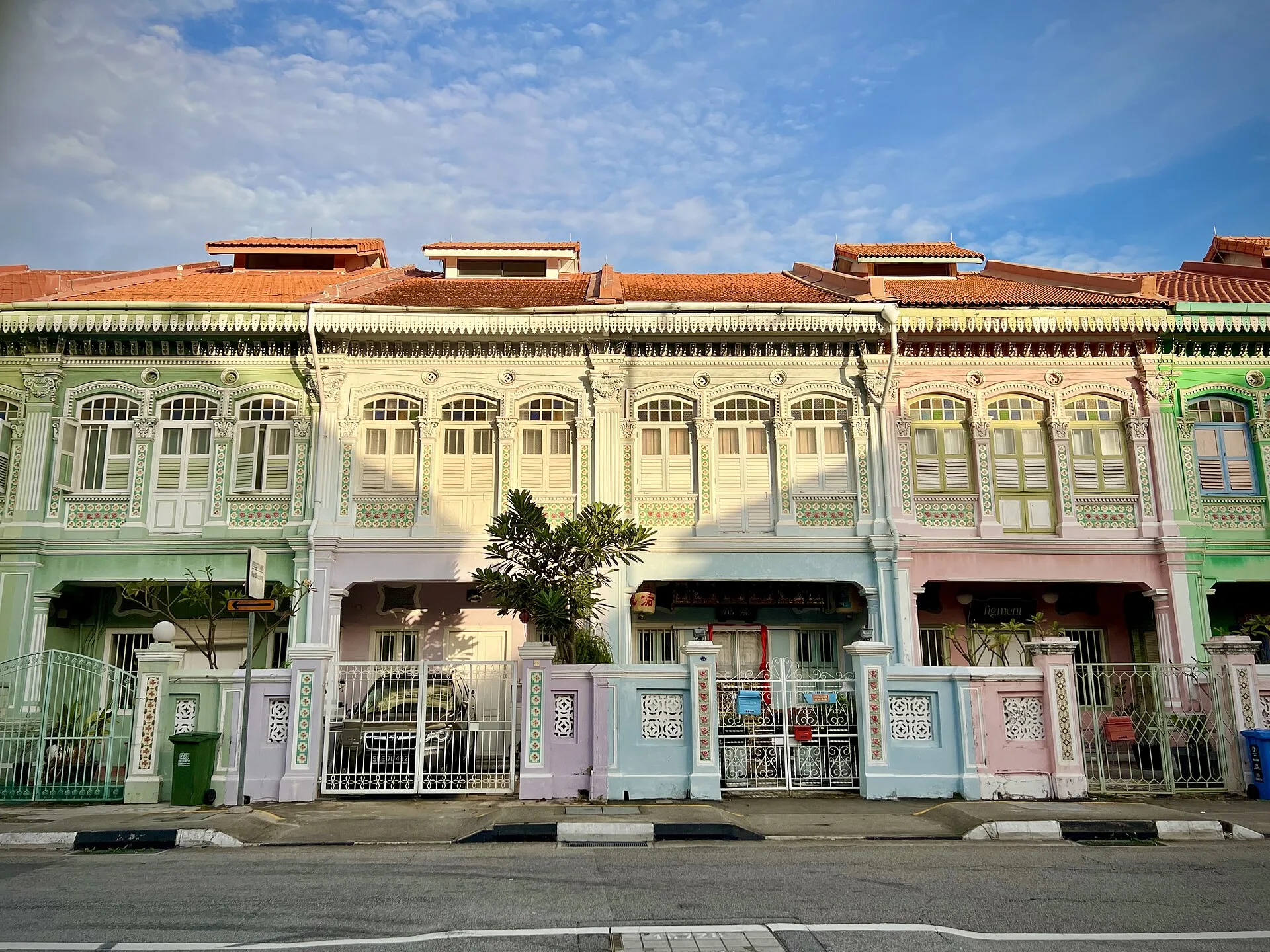
The painted terraces of Koon Seng Road · 2024 · Photo: Sharon Hahn Darlin, CC BY 2.0, via Wikimedia Commons

Dusk is short and quick. The blue light after sunset, when the sky still holds some colour and the street lamps have come on, lasts perhaps twenty minutes. Be in position before it starts, not walking toward it.
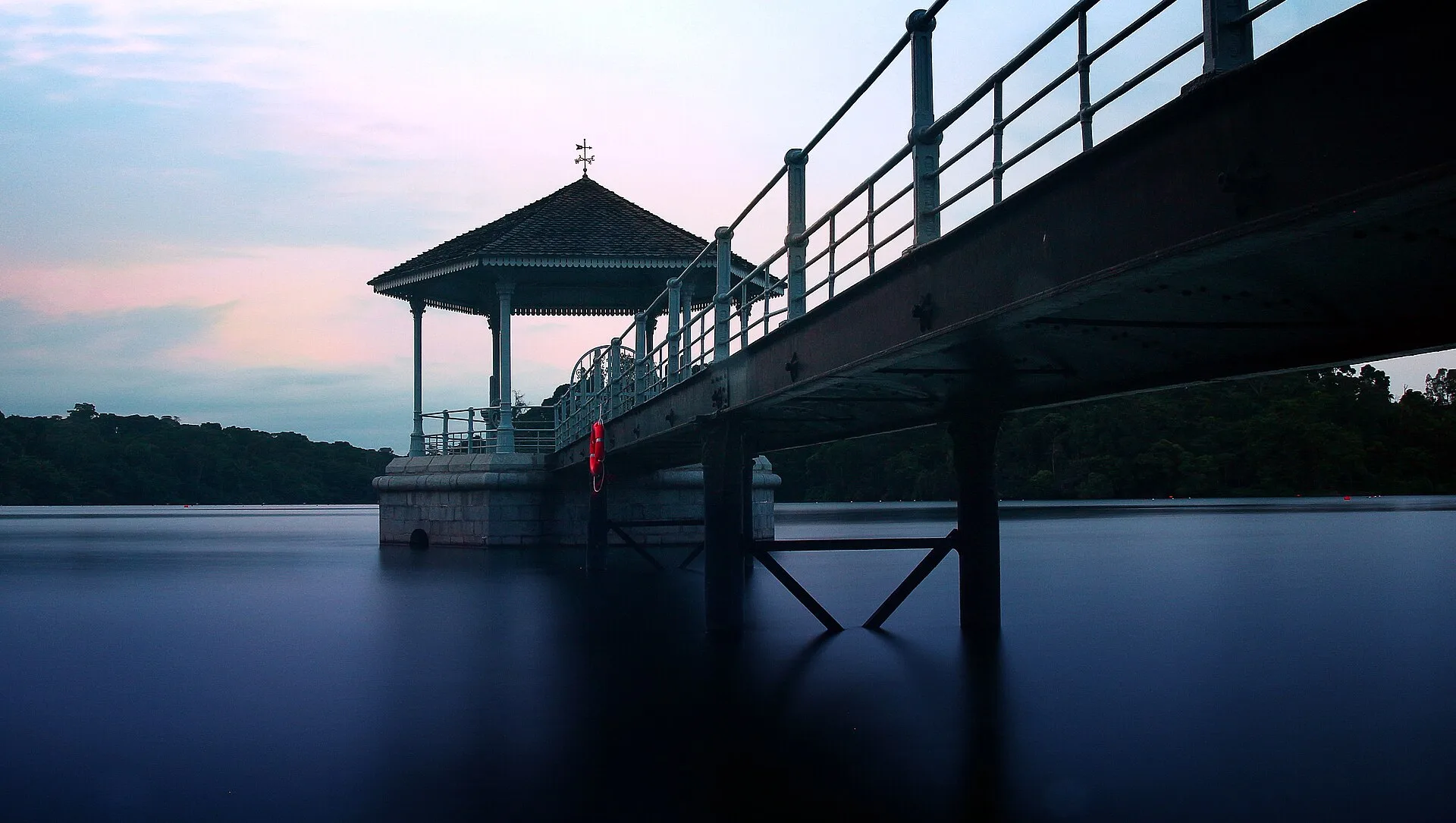
The boardwalk and pavilion at dusk · 2012 · Photo: Erwin Soo, CC BY 2.0, via Wikimedia Commons

Working in hard light
If you are out at noon, use it rather than fight it. Look for shade and photograph from inside it, out toward the bright street, or photograph inside the shade itself: five-foot ways, covered markets and temple halls all have soft, even light at midday. Strong sun also makes bold shadows and saturated colours, and a painted wall with a sharp shadow across it can work well. Expose for the bright parts and let the shadows go dark.
Fog on the lens
One problem catches every visitor once. Step out of an air-conditioned room with a cold camera or phone and the lens fogs up instantly in the warm, wet air. Wiping it only smears it. Keep the camera in its bag for ten minutes, or carry it out of the cold early, and let it warm up slowly.
After the rain
The best light of the day often comes just after a storm. The air is clearer, the clouds soften the sun, the roads and pavements turn into mirrors, and every colour looks deeper for being wet. Shophouse fronts, temple roofs and the leaves in the parks all look richer than they did an hour earlier. Wait out the storm under a roof, and walk out as soon as it eases.
At night, wet ground doubles the lights. On the City Evenings walk, the promenade around the bay after an evening shower is the best version of a familiar view, with the lights of the far shore laid out on the paving at your feet.
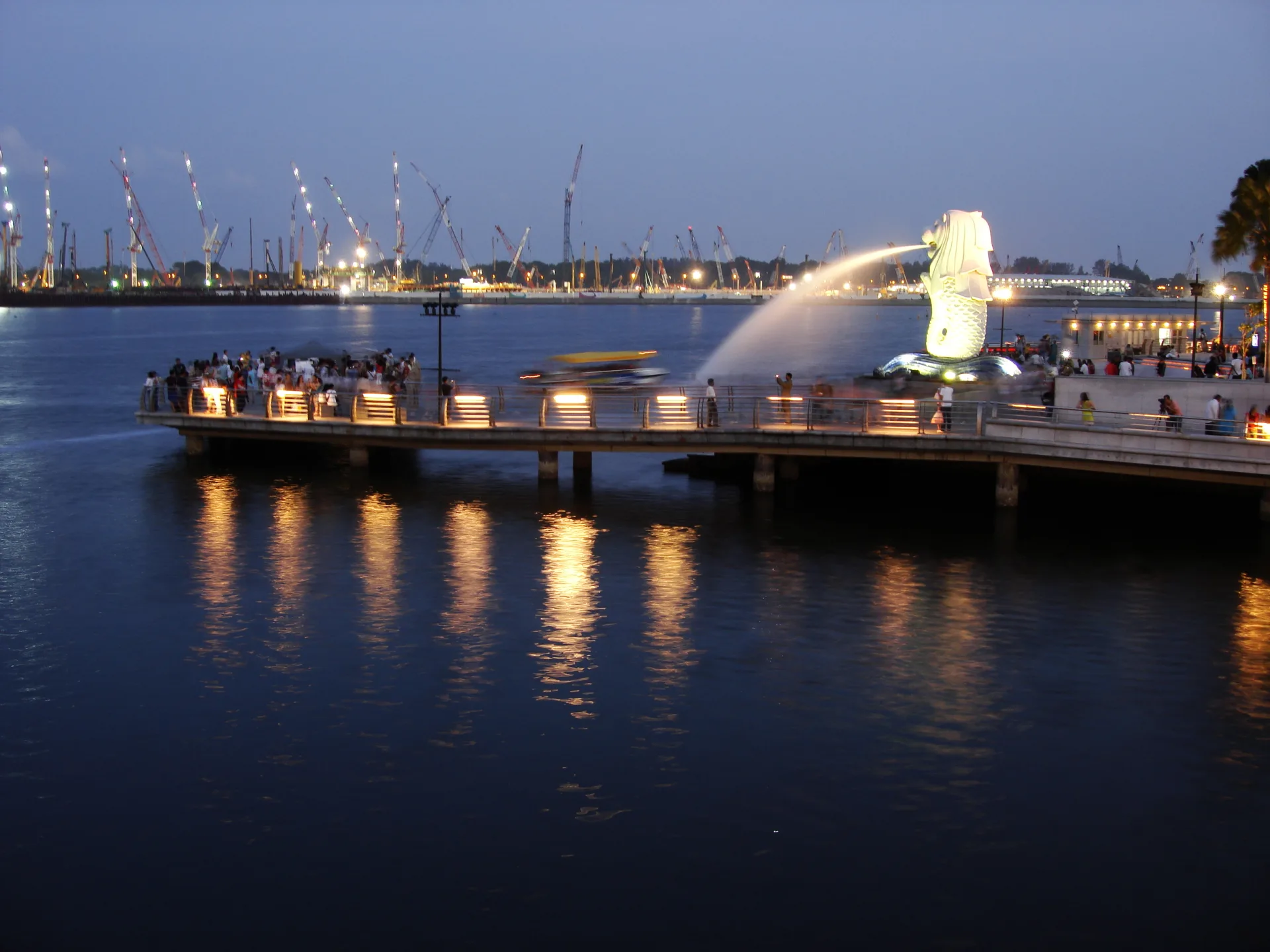
The Merlion fountain as the lights come on · 2008 · Photo: Jorge Láscar, CC BY 2.0, via Wikimedia Commons

A last tip for the reservoir paths on the Water & Island walk: still water before the wind gets up gives the best reflections, and that again means early.