Notes · 20 December 2025
The monsoons, for walkers
Singapore's two monsoons and the months between them, and what each means for a day on foot.
Singapore has no winter and no summer, but its weather does have a pattern. The year turns on two monsoons, when the wind blows steadily from one direction for months, with quieter spells between them. Knowing where you are in the year helps decide which walk to do and when to start.
The northeast monsoon: December to early March
The wind comes from the northeast, and the first half of this season is the wettest time of the year. December and January bring days of grey sky and long spells of steady rain, sometimes lasting a whole day or more. Trails get muddy and streams run high; the boardwalks and covered paths are the better choice. Have a dry plan ready, such as a museum or a long lunch.
The second half is quite different. From late January the weather often turns dry and breezy, with clear skies and lower humidity. February is often one of the driest months of the year, and this is the best time for the long walks: the Southern Ridges, or a full loop of the reservoir on the Water & Island walk.
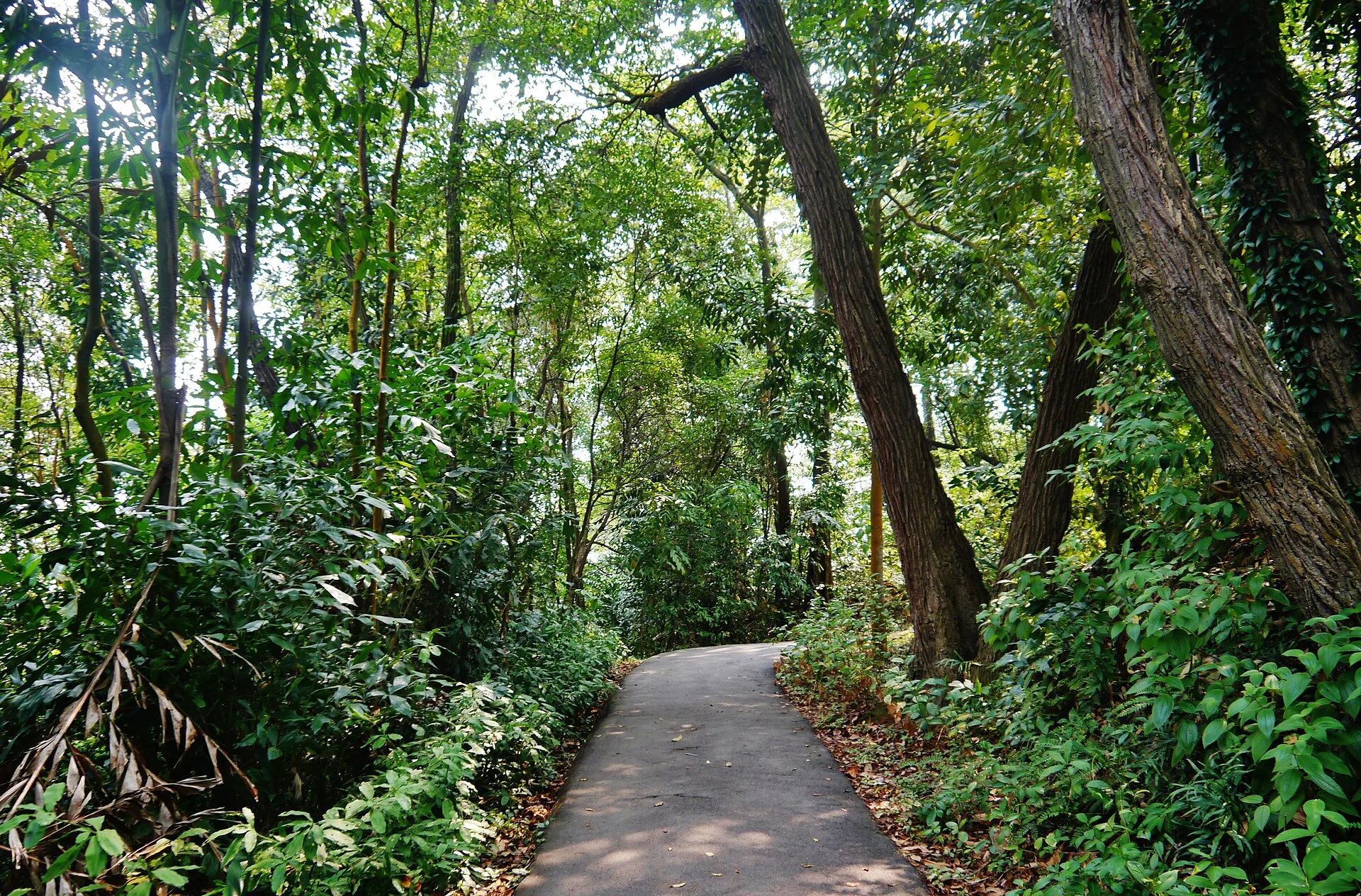
A quiet stretch of the trail · 2015 · Photo: Zairon, CC BY-SA 4.0, via Wikimedia Commons

Between the monsoons: April and May
The wind drops and the heat builds. These are among the hottest months, with still air and high humidity. Thunderstorms grow through the day and usually break in the afternoon, often with heavy rain and a lot of lightning. Start early, aim to be under a roof by two, and turn back at the first thunder on any exposed path.
The southwest monsoon: June to September
The wind swings round to the southwest. This is a drier season, but it has its own kind of storm: lines of thunderstorms that build over the sea at night and sweep across the island before dawn or in the early morning, with strong gusts and a burst of hard rain. If you wake to a dark sky in the west, wait an hour before setting out; the line usually passes quickly and the rest of the day is fine. Some years also bring smoke haze in these months, and it is worth checking the air quality reading before a long walk.
Between the monsoons again: October and November
The second quiet spell is like the first, but wetter. Afternoon and evening thunderstorms are frequent, and November is one of the rainiest months of the year. Mornings are usually clear, so the pattern is the same: go early, finish by lunch.
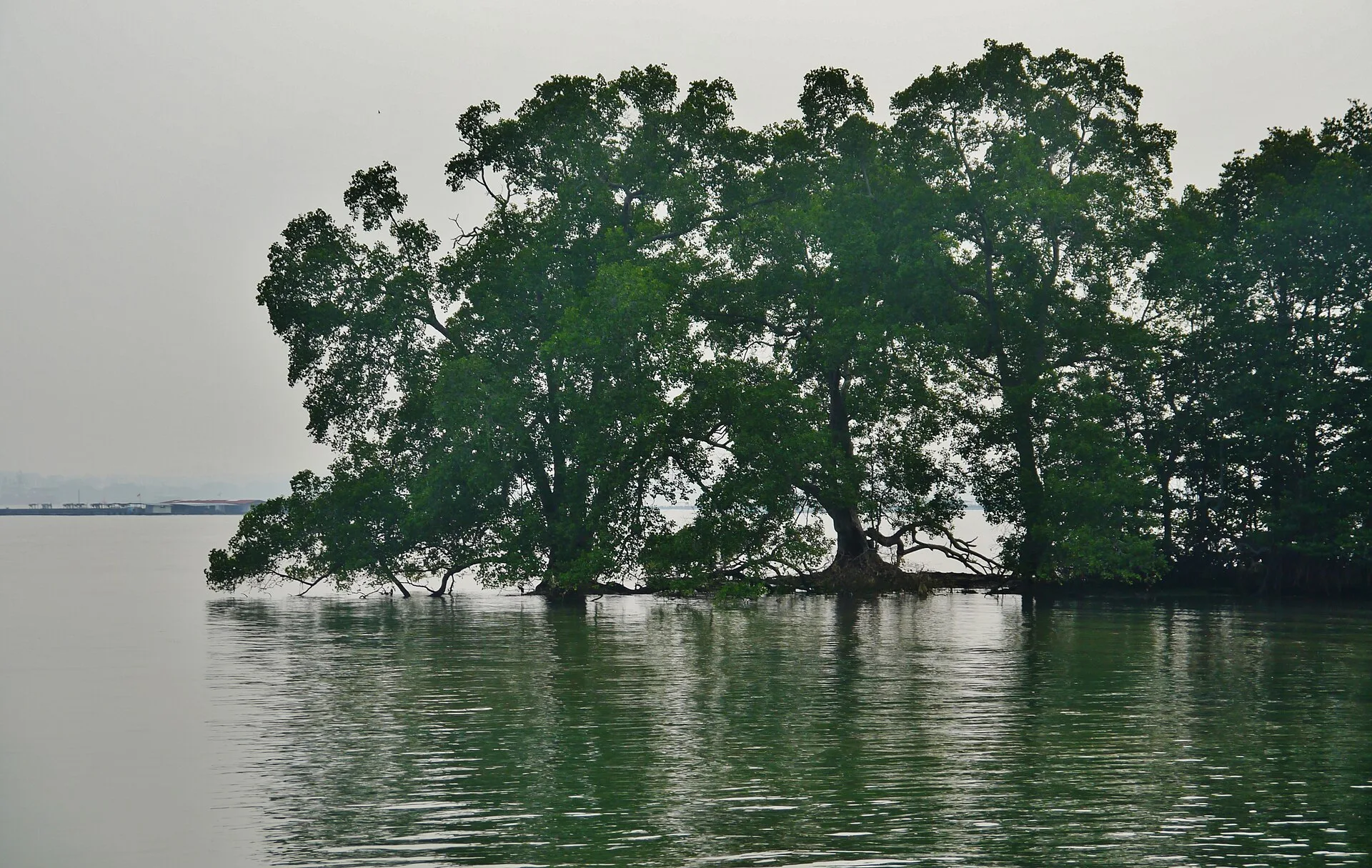
Trees standing in the high tide, Chek Jawa · 2015 · Photo: Zairon, CC BY-SA 4.0, via Wikimedia Commons

Whatever the month
Carry an umbrella; it doubles as a sunshade. Expect a storm on most afternoons in the wetter months and enjoy it from a five-foot way or a food centre. The tide and the season matter for the island walks too: Chek Jawa's flats are best seen at a low tide, which in some months falls in the early morning. The Plan a walk page has the practical details.