Notes · 26 September 2026
Old prints, the same streets
The prints and photographs of about 1900 on this site, and what the same places look like today.
A few of the pictures on this site are much older than the rest: prints and photographs from around 1900, scanned by libraries and museums and shared openly. They were made for travellers and for sale as postcards and sets of views, often from photographs taken by studios in the town. Seen next to the same places now, they are a reminder of how much and how little has changed.
Along the river
The photograph of Boat Quay from about 1900 shows the curve of the river, a few boats at rest on still water and a long row of low buildings along the quay. The curve of the bank is the same today, and so is the line of low roofs along it, although the working boats are gone, the buildings are restaurants and a wall of towers stands behind them. Stand on the bridge at the end of the quay on the River & Telok Ayer walk and the old view lines up surprisingly well.
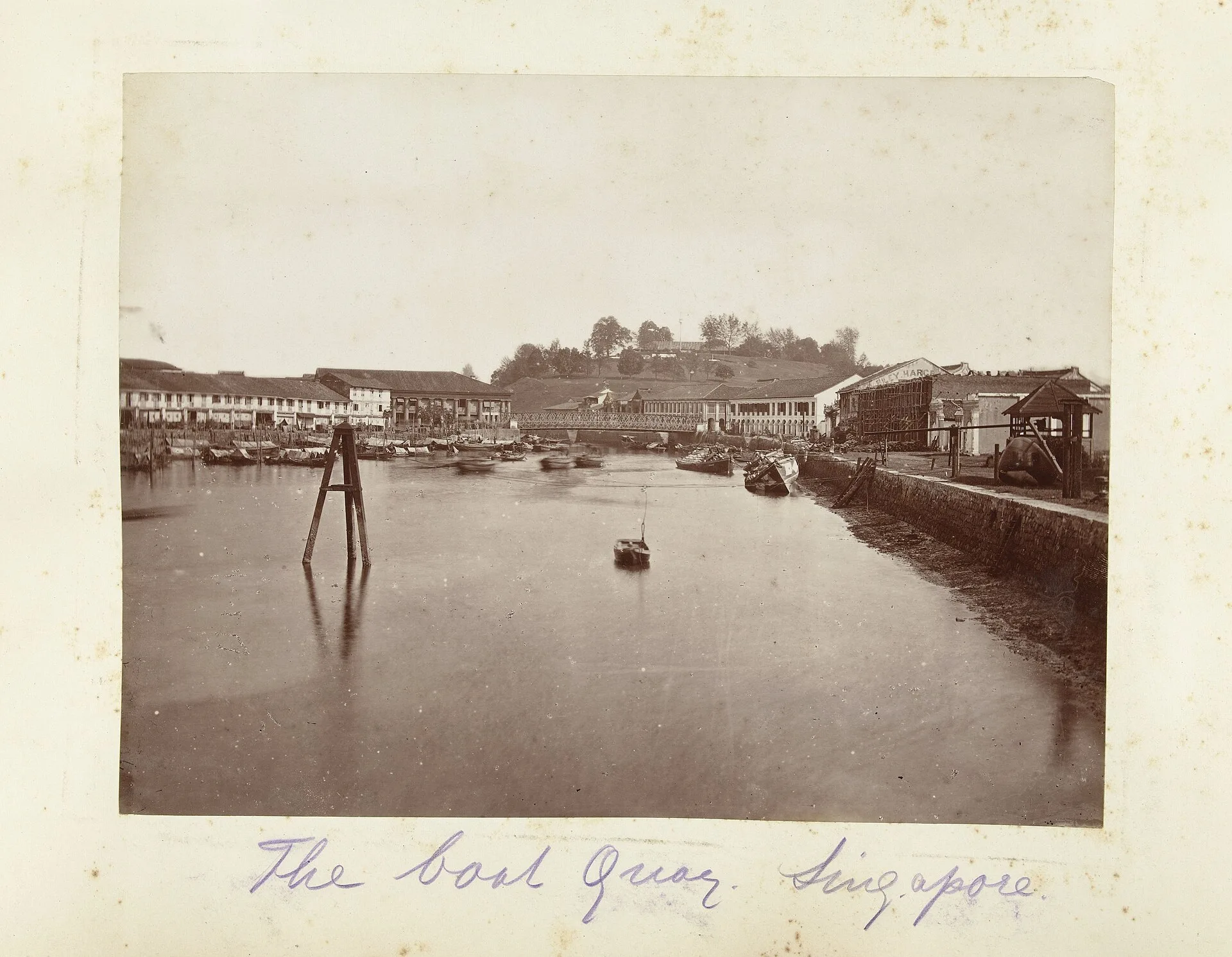
Boat Quay, an old photograph · about 1900 · Photo: Rijksmuseum, CC0, via Wikimedia Commons

The coloured print of Cavenagh Bridge was published a few years later. The bridge in it is the same one you can walk over today, with the same iron towers at each end; the buildings around it and the boats underneath are what have changed.
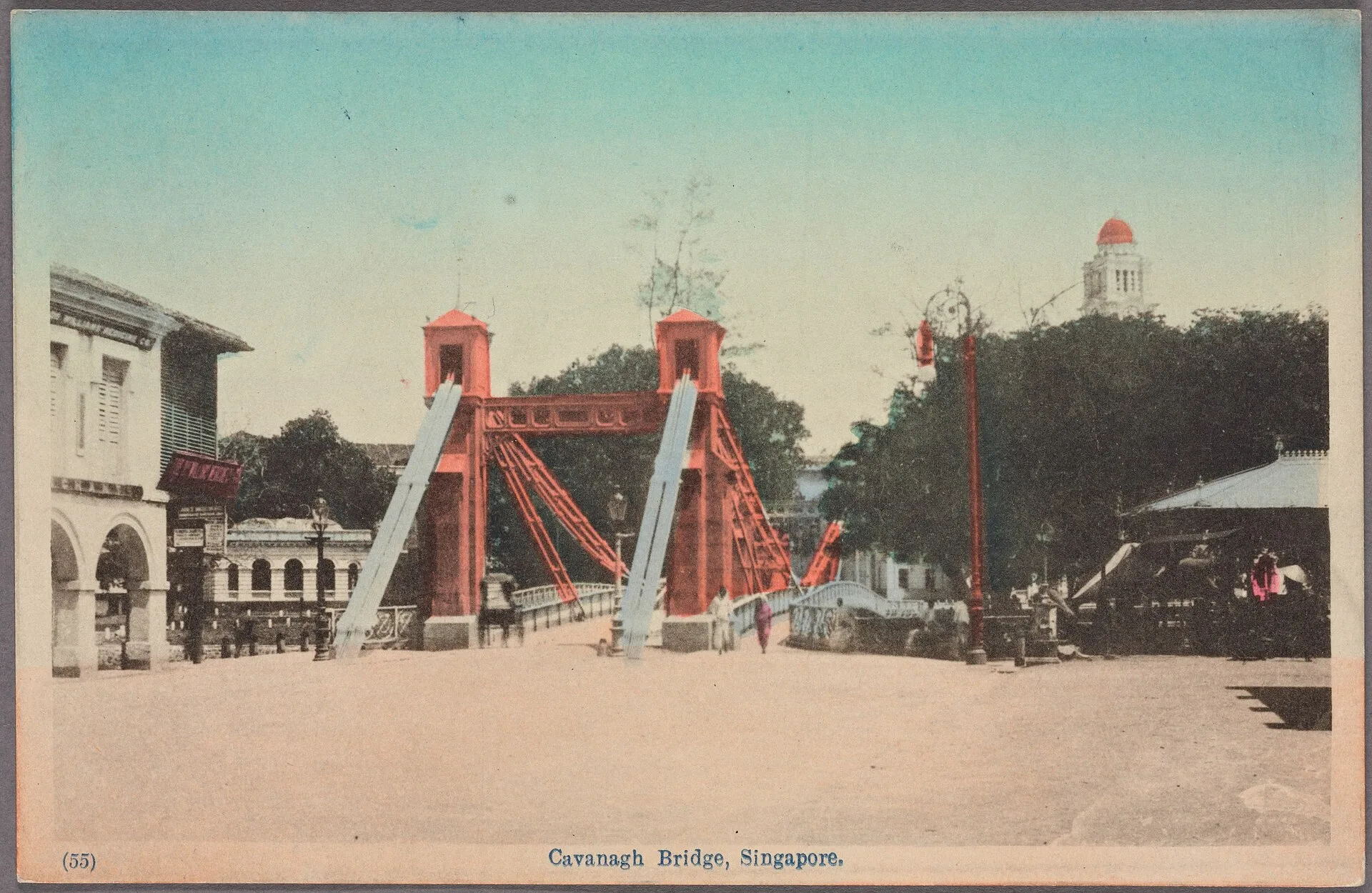
Cavenagh Bridge, an old print · about 1907 · Photo: Scan by NYPL, Public domain, via Wikimedia Commons

The old streets
On the Old Streets walk, two prints show streets near the river. In Kling Street, arcaded corner houses face a tall, elaborate building across an almost empty road. The street is now Chulia Street, among the office towers of the business district. The road to Tanjong Pagar is busier: bullock carts loaded with sacks, rickshaws, walkers in wide hats and a row of shops with deep verandahs. Little of what is in the picture still stands, but the busy road is still there, and so is the traffic.
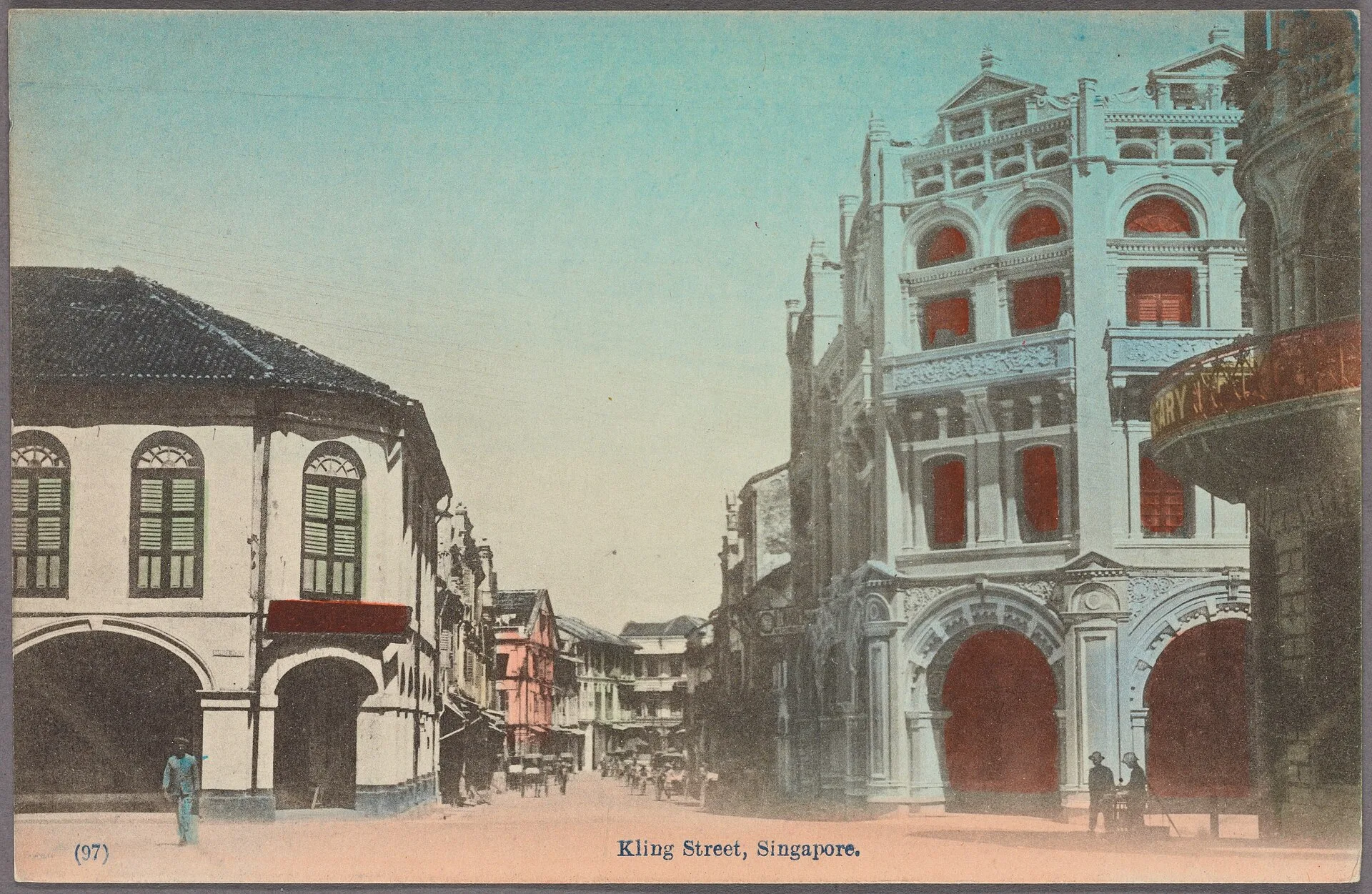
Kling Street, an old print · about 1907 · Photo: Scan by NYPL, Public domain, via Wikimedia Commons

Reading an old print
A few things help when looking at these pictures. The colours in the printed ones were added by hand or by printing, and are not to be trusted; the skies are often too blue and the roofs too red. People and carts are often blurred, because the exposures were long, and a busy street can look strangely empty. Captions were sometimes wrong even at the time, and the dates given are often approximate. Treat them as a view, not as a record.
Then and now
The best way to use them is on foot. Take the old picture with you, find where the photographer stood, and look for what has stayed: a curve of road, a line of roofs, the shape of the river bank. Water and slopes change least. The photograph of the town reservoirs on the Water & Island walk, from about the same years, shows a grassy embankment, a small pavilion over the water and wooded hills behind: much the same mix of water, lawn and forest that the reservoir walk passes today.
The pictures from 1973 on the City Evenings walk are a newer set of the same kind: hawker stalls, satay on the grill and a street vendor's cart. In another fifty years, today's photos will look just as distant.